Modules




nr 1
nr 2
nr 3
nr 4
Seasalt is the first poem of the volume "The Brooklyn Branding Parlors"
by James Purdy, and is also the opening of the song cycle. The melody is
based on the fifth hour of the tone clock, an hour for which I seem to
have developed a special liking. Not only in my compositions but also in
my bass solo's I often play the fifth hour. This is undoubtedly due to
the fact that the number 5 is of a very important number in my life. My
date of birth, for instance, is 25-05-1955, and my personal numbers also
is 5. This number is acquired by adding all the numbers in date of birth:
2+5+5+1+9+5+5=23 and 2+3=5. Recently I bought a ticket in the lottery of
which the last two numbers were 25, and I won two prizes: 25 guilders
and 50 guilders. But this liking for the fifth hour can also be dictated
by it's extraordinary color, originated by the diminished fifths and the
semitones. They give this hour its intense, but also melancholy character.
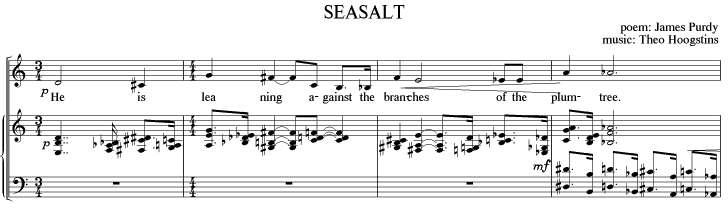
The first four bars of seasalt clearly show the importance of the
diminished fifths in the melody:
 The four triads
the melody was derived from are:
The four triads
the melody was derived from are:
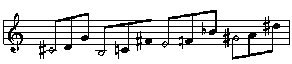
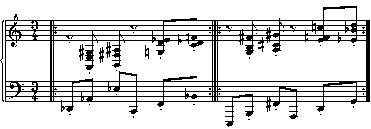
At the top of this article, four modules of the tone clock are displayed,
and they are the basic material for this composition. The four fifth hour
triads from the melody are displayed in module nr 1. In the melody the
sequence of the notes is not as strictly organized as in the tone clock
displays, but the triads appear in cells, and within these cells the sequence
of the notes can be varied.
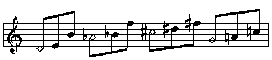
The accompaniment of the three saxophones has a rhythmical pattern
of its own, and is based on the seventh hour:
The eighth hour is displayed in module nr 2. In the fourth bar,
the baritone sax and the double bass play a pattern based on major fourths
descending chromatically. This combination of intervals (major fourths
and semitones) is found in the fourth hour of the tone clock. This same
hour is played in the background for the soprano sax solo by the three
remaining saxophones, playing rhythmical accents in a fourth hour harmony
as displayed in module nr 3. The double bass plays a pattern derived from
the ninth hour, steered by the tenth, as displayed in module 4.